

Treatment Snapshot
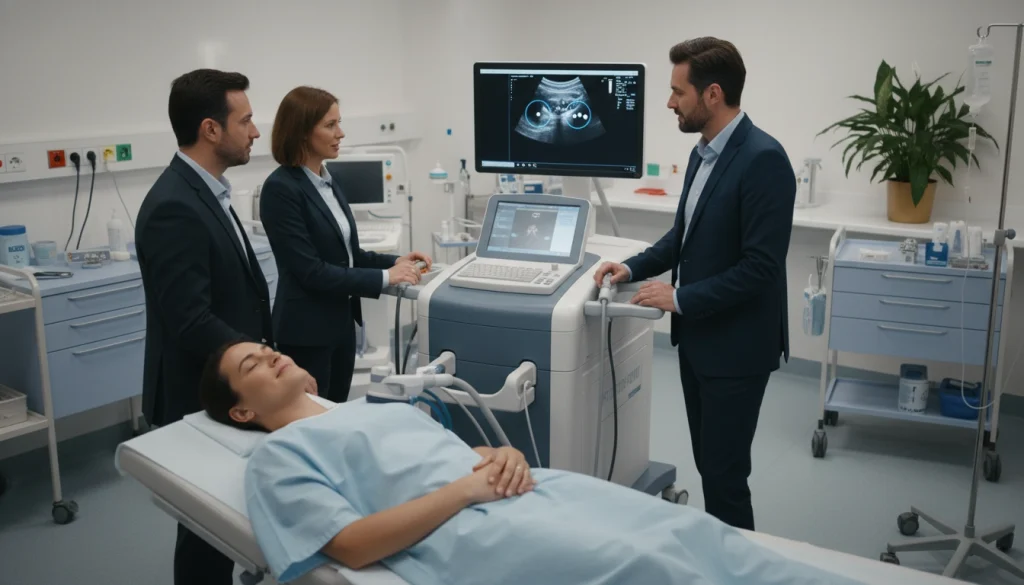
Dealing with kidney stones can be very painful and stressful. Luckily, modern medicine has effective solutions that focus on your comfort and recovery. ESWL is a non-invasive method that uses high-energy shock waves to break down stones.
We, as your healthcare partner, aim to offer treatments that avoid surgery whenever we can. This advanced method lets us target stones precisely. It makes the healing process smoother for our patients.
Choosing this method means you get a patient-centered experience that’s efficient and safe. We’re committed to making sure you feel informed and supported on your path to better health.
Key Takeaways
- ESWL is a non-invasive medical procedure used to treat kidney stones.
- The treatment utilizes high-energy shock waves to break stones into smaller pieces.
- Patients often avoid the need for traditional surgery through this method.
- The procedure is designed to be safe, effective, and patient-centered.
- Our team provides expert guidance to support your recovery and overall well-being.
Understanding the Basics of ESWL
Many patients wonder how sound waves can treat kidney stones. This method has changed how we handle urinary health. It does so without the need for surgery.
Defining Extracorporeal Shock Wave Lithotripsy
ESWL is a non-invasive way to break down kidney stones. It uses sound waves to target stones in the kidney or upper ureter.
After breaking down, the stones can pass through the urinary tract. This means patients can get rid of the stones without surgery or long hospital stays.
The History and Evolution of Lithotripsy Technology
Before the 1980s, big kidney stones meant open surgery. These surgeries were tough and took a lot of time to recover.
The start of lithotripsy changed urology. It moved away from invasive methods, making treatments safer and more precise.
Now, ESWL keeps getting better for patients. It makes treatments less hard on the body. This leads to quicker recovery and better results.
How ESWL Works to Treat Kidney Stones
High-pressure sound waves are used to safely treat kidney stones without surgery. This method, called ESWL, is a big step forward in urology. It lets doctors treat problems inside the body from outside.
The Physics of Shock Wave Generation
The first step is making high-energy sound pulses. This is done with special equipment that turns electrical energy into sound waves.
These pulses then move through the body’s soft tissues easily. This is because our bodies are mostly water. They pass through skin and muscle until they hit something denser, like a kidney stone.
Focusing Energy on Targeted Calculi
Success in ESWL treatment depends on precision. The lithotripter focuses these shock waves on the stone’s exact location.
This focused energy breaks the stone into tiny pieces. It does this without harming the healthy tissue around it.
The Role of Imaging Systems in Precision
Keeping the treatment accurate is key for safety and success. We use advanced imaging systems to watch the stone in real-time.
These systems, like fluoroscopy or ultrasound, help us adjust the shock waves as needed. This ensures the ESWL energy hits the right spot, even if the patient moves.
Candidates for ESWL Treatment
We look at many factors to see if ESWL is the best choice for treating your kidney stone. We check your body’s shape and the stone’s details. This helps us decide if this non-invasive method is best for you.
Criteria for Patient Eligibility
We aim to find stones that can be broken up well. People with stones in the kidney or upper ureter usually do well with this treatment.
The size of the stone is important too. Stones between 4 millimeters and 20 millimeters work best. We also look at the stone’s type, as some are harder and need different treatments.
Factors Influencing Treatment Success
Many things can affect how well you do after the treatment. Your BMI is key, as too much tissue can block the shock waves.
How dense the stone is also matters. Denser stones might need more energy or more treatments. We use these details to set clear goals for your recovery.
Contraindications and Medical Exclusions
While ESWL works well for many, it’s not for everyone. We focus on keeping you safe by avoiding risks during and after treatment.
- Pregnancy is a strict no due to radiation and shock wave risks.
- Any active urinary tract infections need to be treated first.
- Those with bleeding issues or on blood thinners might need other treatments.
- Obstructions that block stone fragments are also a no-go.
| Factor | Ideal Candidate | Requires Caution |
|---|---|---|
| Stone Size | 4mm – 20mm | Greater than 20mm |
| BMI | Normal Range | High BMI |
| Infection Status | Clear/Negative | Active UTI |
| Pregnancy | Not Pregnant | Pregnant |
We’re committed to helping you find the best way to get better. If ESWL isn’t right, we’ll talk about other options to keep you healthy long-term.
Preparing for Your ESWL Procedure
Your journey toward relief starts with careful planning and clear communication. We believe that proper preparation is key to a smooth and effective medical experience. By following our guidance, we ensure your ESWL treatment is safe and successful.
Pre-operative Medical Evaluations
Before your session, we do essential medical evaluations. These tests help us understand your health and confirm if you’re a good candidate for the procedure.
You’ll have blood work to check clotting factors and kidney function. We also use imaging like ultrasound or CT scans to find your kidney stones. This information is critical for the ESWL technology.
Medication Adjustments and Dietary Guidelines
Safety is our main concern, so we review your medications carefully. You might need to stop certain drugs, like blood thinners, a few days before your appointment.
Our team will give you a personalized schedule for medication adjustments. We also provide dietary instructions, including fasting requirements before your procedure. Following these guidelines helps minimize risks and prepares you for treatment.
What to Bring and Logistics for the Day of Surgery
Knowing what to expect on the day of your surgery can reduce anxiety. Wear comfortable, loose-fitting clothes and bring a list of your medications. It’s also important to have someone to drive you home afterward.
| Category | Action Item | Timeline |
|---|---|---|
| Medical | Complete blood work and imaging | 1 week prior |
| Medication | Stop blood thinners as directed | 3-5 days prior |
| Logistics | Arrange for a ride home | 24 hours prior |
| Preparation | Follow fasting instructions | Night before ESWL |
We’re here to support you every step of the way. If you have any questions about preparation, please contact our office staff. We want you to feel fully informed and comfortable as you prepare for your ESWL session.
The ESWL Procedure Experience
Getting ready for a medical procedure can be scary. But knowing what to expect during your ESWL session can help calm your nerves. We create a peaceful environment where your health and comfort are our main focus. By understanding the steps, you can face your treatment with confidence.
Anesthesia and Sedation Options
We offer different sedation levels to keep you comfortable. Most get intravenous medication to relax or sleep lightly. This way, you feel less pain but stay stable during the session.
Your healthcare team will pick the best sedation for you. They consider your health history and the stone’s complexity. We aim for effective pain control and quick recovery after the ESWL.
| Sedation Level | Patient Awareness | Recovery Speed |
|---|---|---|
| Minimal Sedation | Fully awake | Very fast |
| Moderate Sedation | Drowsy but responsive | Moderate |
| General Anesthesia | Unconscious | Slower |
Positioning and Patient Comfort
Getting the right position is key for a successful treatment. You’ll lie on a special table to keep you steady. Our staff will use soft cushions to make sure you’re comfortable.
We carefully align your body with the machine’s focal point. This ensures the shock waves hit the stone accurately. We adjust your position until everyone is happy with it.
Monitoring During the Lithotripsy Session
Your safety is our top priority. We watch your vital signs closely during the ESWL. This includes heart rate, blood pressure, and oxygen levels. Our team can quickly respond to any changes.
- Continuous pulse oximetry to track oxygen saturation.
- Regular blood pressure checks for cardiovascular stability.
- Real-time electrocardiogram monitoring for heart rhythm.
We keep a close eye on your body’s responses. This ensures top-notch care. You’re never alone, and our team is ready to support you and answer any questions.
Post-Procedure Recovery and Expectations
Your journey to relief doesn’t stop when you leave the treatment room. We’re here to help you every step of the way. Even though ESWL is non-invasive, your body needs some time to adjust and get rid of the stone fragments.
Immediate Aftercare in the Recovery Room
After the procedure, you’ll go to a recovery area. Our team will watch your vital signs to make sure you’re okay after the sedation or anesthesia.
We’ll check how you’re feeling and give you tips on staying hydrated. Most people can go home a few hours later when they’re awake and feeling better.
Managing Discomfort and Pain at Home
You might feel some soreness in your back or flank as the shock waves work. You might also see blood in your urine as the stone fragments pass.
To handle these symptoms, follow these steps:
- Drink lots of water to help flush out the fragments.
- Take over-the-counter pain medicine as your doctor advises.
- Use a warm compress on the treated area for comfort.
If you have severe pain, a high fever, or trouble urinating, call your doctor right away. These could be signs of a problem that needs more attention.
Timeline for Returning to Daily Activities
Most people can start with light activities 24 to 48 hours after ESWL. Listen to your body and avoid heavy lifting or hard exercise for a week.
| Recovery Phase | Expected Activity Level | Focus Area |
|---|---|---|
| Days 1-2 | Rest and light movement | Hydration and pain management |
| Days 3-7 | Gradual return to work | Monitoring urine for fragments |
| Week 2+ | Normal routine | Follow-up imaging assessment |
Rest and staying hydrated help your body heal. By following these tips, your recovery from ESWL will be as smooth and quick as possible.
Potential Risks and Complications
While ESWL is a highly effective treatment, it’s important to know the possible risks. We want to be open with you so you can feel ready and supported. Most people heal well, but knowing about side effects helps manage them better.
Common Side Effects and Their Management
After your procedure, you might notice some minor changes. Many people see mild bruising or skin redness where the shock waves were applied. These usually go away within a week.
You might also feel some discomfort in your kidneys or soreness as your body processes the treatment. Over-the-counter pain relief can help. Drinking plenty of water also helps your body get rid of small stone fragments more easily.
Rare but Serious Medical Risks
Though rare, we watch for certain issues to keep you safe. A steinstrasse is a rare condition where stone fragments get stuck in the ureter. This can cause pain or less urine flow.
Minor bleeding or infection can also happen, but very rarely. We use precise imaging to lower these risks during ESWL. If any unexpected problems come up, we’re ready to act fast.
When to Contact Your Healthcare Provider
It’s important to know when to call for help. If you notice anything unusual, reach out to us right away. We’re here to help and make sure your health is our main concern.
| Symptom | Expected Action | Urgency Level |
|---|---|---|
| Mild skin bruising | Monitor at home | Low |
| Blood in urine | Increase fluid intake | Low to Moderate |
| High fever or chills | Call provider immediately | High |
| Severe, unmanaged pain | Seek medical evaluation | High |
If you have persistent vomiting or can’t pass urine, get medical help right away. These signs mean your body might need extra help to clear the stone fragments. Your quick communication helps us provide the best care for your ESWL recovery.
Comparing ESWL to Other Stone Removal Methods
When you’re diagnosed with kidney stones, knowing about your options is key. We think it’s important to understand the differences between each treatment. ESWL is popular because it’s not invasive. But, other methods might be better for certain situations.
ESWL Versus Ureteroscopy
Ureteroscopy uses a thin scope to find and remove stones. It’s different from ESWL, which breaks stones with shock waves. Ureteroscopy lets doctors see and take out the stone directly.
This method is often chosen for stones in the lower ureter. It’s more invasive than shock wave therapy. But, it often leads to a higher success rate for some stone types.
ESWL Versus Percutaneous Nephrolithotomy
PCNL is for big or complex stones. A surgeon makes a small cut in the back to reach the kidney. This is more invasive than ESWL and usually means a short hospital stay.
But, it’s very effective for big “staghorn” stones that can’t be broken up by shock waves.
Choosing the Right Procedure for Your Stone Type
Choosing the right treatment depends on many things. We look at your stone’s size, location, and type. We also consider your body and medical history. This helps us find the safest and most effective option for you.
- Stone size and volume
- Location within the urinary tract
- Patient body mass index (BMI)
- Previous surgical history
| Procedure | Invasiveness | Best For | Recovery Time |
|---|---|---|---|
| ESWL | Non-invasive | Small to medium stones | Short |
| Ureteroscopy | Minimally invasive | Ureteral stones | Moderate |
| PCNL | Invasive | Large, complex stones | Longer |
The Role of Imaging in ESWL Success
Getting the best results from lithotripsy needs a mix of real-time imaging and expert care. We focus on clear images to make sure each shock wave hits its mark during your ESWL. This use of advanced tech is key to our goal of top-notch, precise medical care.
Fluoroscopy Versus Ultrasound Guidance
We use fluoroscopy and ultrasound to track kidney stones. Fluoroscopy uses X-rays to show the stone’s location in real time. It works well for stones that show up on X-rays.
Ultrasound, on the other hand, uses sound waves to create images. It’s great for avoiding radiation or for stones that don’t show up on X-rays. Our team picks the best method for your stone and body.
| Imaging Feature | Fluoroscopy | Ultrasound |
|---|---|---|
| Primary Mechanism | X-ray radiation | Sound waves |
| Best For | Calcified stones | Radiolucent stones |
| Radiation Exposure | Yes | None |
| Soft Tissue View | Limited | Excellent |
Optimizing Stone Visualization
We do more than just choose an imaging method. We adjust the patient’s position to keep the stone in focus. This helps avoid damage and makes treatment more efficient.
We also use contrast agents to make the urinary tract clearer. This meticulous attention to detail lets us watch the stone break down in real time. With these advanced imaging tools, we make sure your ESWL is safe and effective.
Technological Advancements in Modern Lithotripters
We are in a new era of stone management thanks to advanced engineering in modern lithotripters. These devices have greatly improved, making care safer and more effective for patients needing ESWL. Our dedication to the latest medical innovations ensures top precision in every procedure.
Improvements in Shock Wave Delivery
Modern systems have improved how energy is directed at the stone. This means we can now break stones more efficiently while protecting healthy tissues.
This is key for patient comfort and quick recovery. With better targeting, ESWL is more precise than ever, often needing fewer sessions.
Integration of Digital Imaging Systems
High-resolution digital imaging has changed our workflow. These systems let us make adjustments in real-time, keeping focus accurate even if the patient moves.
These tools give us immediate feedback, boosting stone clearance success. We use them to watch progress closely, leading to better results for ESWL patients. Our goal is to use these advanced tools to support your health and recovery.
Managing Stone Fragments After Treatment
After the shock waves, your body starts to pass the debris naturally. The ESWL procedure breaks stones into smaller pieces. These fragments then move through the urinary tract to leave the body.
The Process of Spontaneous Passage
Most people pass these fragments naturally within days or weeks. You might see grit or sand in your urine, which means the treatment worked. Keep an eye on your symptoms to make sure everything goes smoothly.
Stent Placement and Its Purpose
In some cases, we suggest a ureteral stent. This thin, flexible tube keeps the ureter open. It prevents blockages and helps urine flow from the kidney to the bladder.
Hydration Strategies for Effective Clearance
Drinking plenty of water is key during this phase. It helps flush the system and move fragments. Here are some tips for a smooth recovery after ESWL:
- Drink at least 2 to 3 liters of water a day, unless your doctor tells you differently.
- Drink water throughout the day to keep your urine dilute.
- Try citrus drinks like lemonade to help prevent new stones.
- Avoid too much caffeine or alcohol to avoid dehydration and discomfort.
Following these tips helps your body heal. If you have severe pain, fever, or trouble urinating, call us right away.
Long-Term Prevention of Kidney Stones
We believe that keeping your kidneys stone-free is a long-term journey. While ESWL is great at breaking down stones, preventing new ones needs a long-term plan. By working together, we can lower your risk of getting new stones.
Dietary Modifications and Lifestyle Changes
Your daily habits are key to preventing stones. Drinking enough water is the most important step. It helps keep your urine clear and prevents stone growth.
It’s also important to balance your mineral intake. Depending on your stone type, we might suggest changes in sodium, animal proteins, and calcium. These adjustments help prevent mineral buildup.
Metabolic Testing and Medication Management
At times, just changing your diet isn’t enough. We use metabolic testing to find out why you’re getting stones. This involves checking your blood and urine samples.
After finding the cause, we create a medication plan just for you. These meds change your urine’s chemistry, making it hard for stones to form. This approach makes sure your treatment fits your body perfectly.
Follow-up Imaging and Monitoring
Regular scans are essential for your kidney health. Even if you feel fine, scans help catch new stones early. Catching them early is important to avoid pain and more ESWL sessions.
| Strategy | Primary Goal | Frequency |
|---|---|---|
| Hydration | Dilute urine concentration | Daily |
| Metabolic Testing | Identify chemical triggers | Annually |
| Follow-up Imaging | Monitor renal health | Bi-annually |
| Medication | Prevent crystal growth | As prescribed |
Staying on top of these check-ups gives you peace of mind. It helps keep your kidneys healthy. We’re here to help you stay stone-free for years.
The Economic and Healthcare Impact of ESWL
Medical procedures have a big impact beyond the doctor’s office. They affect our wallets and the healthcare system. ESWL shows how technology can help patients while being cost-effective.
Cost-effectiveness in the United States Healthcare System
In the U.S., ESWL is key for treating stones without long hospital stays. It saves money for patients and insurance companies.
This method also frees up hospital resources. Patients get back to their lives sooner. This means less time and money lost during recovery.
Accessibility and Availability of Lithotripsy Services
Lithotripsy services are everywhere, making top-notch care easy to get. Many hospitals offer ESWL on an outpatient basis.
We think everyone should have access to good treatment, no matter where they live. ESWL technology makes it possible to provide consistent care everywhere.
Final Considerations for Patients Seeking ESWL
Choosing the right path for kidney stone management is key. ESWL is a non-invasive option that works well for many. It has a long history of success, thanks to ongoing improvements.
Talk to our expert team about your health needs. This talk helps figure out if ESWL is right for you. We look at all the details to make sure you get the best care.
At Acıbadem Healthcare Group, we care about your comfort and health. We offer the support and top-notch care you need. Contact us today to discuss your treatment options and recovery plan.
FAQ
Q: What exactly is ESWL and how does it work?
A: ESWL stands for Extracorporeal Shock Wave Lithotripsy. It’s a non-invasive way to treat kidney stones. We use shock waves to break down stones from outside the body. The stones then break into tiny pieces that can pass through your urinary tract.
Q: Is ESWL considered a surgical procedure?
A: ESWL is a medical treatment, but it’s not surgery. It doesn’t involve making cuts. At Acıbadem Healthcare Group, we use it to avoid traditional surgeries. This makes recovery faster and less painful.
Q: Who is an ideal candidate for this treatment?
A: Who can get ESWL depends on the stone’s size, location, and type. Stones in the kidney or upper ureter work best. We also look at your Body Mass Index (BMI) and health to increase success chances.
Q: Are there any conditions that would prevent me from having ESWL?
A: Yes, some conditions mean you can’t have ESWL. We don’t treat pregnant women, those with blood clotting issues, or active urinary tract infections. We check your medical history to find the best treatment for you.
Q: How should I prepare for my ESWL session?
A: Getting ready is important for success. You’ll need blood work and imaging before. You might need to stop certain medications and follow a special diet. We’ll give you a checklist to get ready for your procedure.
Q: Will I feel pain during the lithotripsy procedure?
A: We make sure you’re comfortable. We use anesthesia or sedation. You might feel a tapping sensation, but we watch you closely to manage any pain.
Q: What is ‘hematuria’ and should I be worried if it occurs after treatment?
A: Hematuria means blood in your urine. It’s common after ESWL as stone pieces pass through. It usually goes away in a few days. We tell you how to watch for it and when to call us.
Q: What is a ‘steinstrasse’ and how is it managed?
A: Steinstrasse is a German term for a blockage of small stone pieces. It’s rare but we watch for it. If it happens, we might use stents or more treatments to clear the blockage.
Q: How does ESWL compare to ureteroscopy?
A: ESWL is non-invasive and uses shock waves. Ureteroscopy involves a thin scope. ESWL is often chosen for its quick recovery and no cuts. But, it depends on your stone and body.
Q: Why is imaging technology so important during the procedure?
A: Imaging is key for success. We use X-ray or ultrasound to see the stone in real-time. This helps us aim the shock waves accurately, protecting healthy tissue.
Q: How can I help my body pass the stone fragments after treatment?
A: Drinking lots of water helps. We suggest increasing your fluid intake. Sometimes, we use a stent to help the fragments pass.
Q: What steps can I take to prevent kidney stones from forming again in the future?
A: Preventing stones is a team effort. We might do tests to find out why you got stones. Then, we give you diet advice and might prescribe medicine to keep your kidneys healthy.