

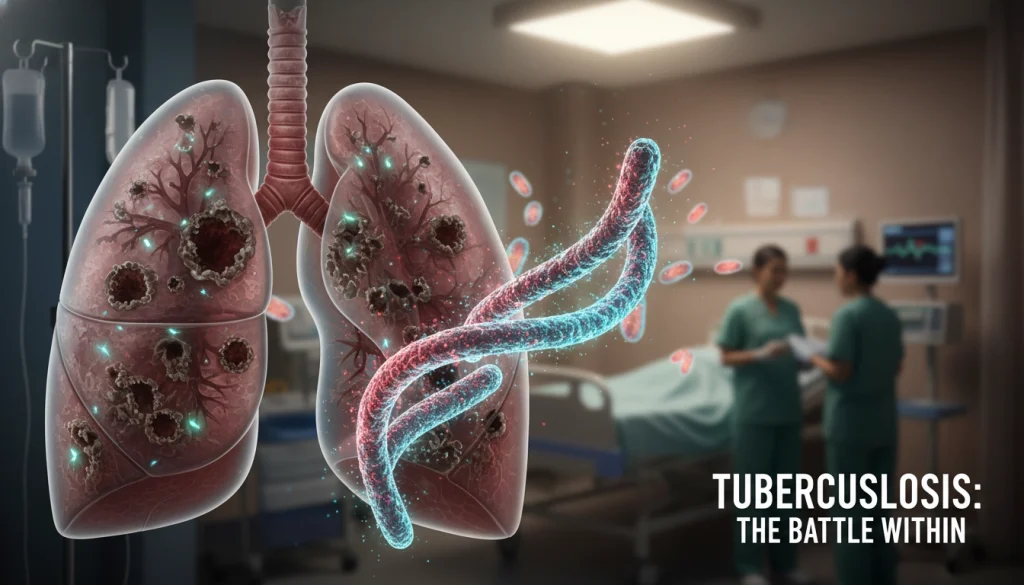
Treatment Snapshot
Getting a diagnosis can be scary. Tuberculosis is a serious lung infection. But, it’s treatable with the right medical care.
We want to help you understand your health better. Early detection and treatment are key. Together, we can improve your health.
This guide will help you understand tuberculosis. We want you to feel confident and informed. Take steps towards better health with our help.
Key Takeaways
- Tuberculosis is a bacterial infection that typically affects the lungs.
- Early medical detection is the most effective way to manage the condition.
- Professional clinical intervention is essential for a successful recovery.
- Patient education plays a vital role in the healing process.
- We are committed to supporting you with clear, expert medical guidance.
Understanding the Biology of Tuberculosis
To grasp how tuberculosis impacts our bodies, we need to explore the tiny culprits behind it. By delving into the biological aspects of this disease, we gain insight into our immune system’s role. This understanding empowers us to take charge of our health.
The Mycobacterium tuberculosis Complex
The main cause of this illness is a group of bacteria called the Mycobacterium tuberculosis complex. These bacteria have thick, waxy walls that help them survive in tough conditions. The most common type is Mycobacterium tuberculosis.
These bacteria are highly adapted to live inside humans. Knowing about them helps doctors find the best treatments. The complex includes several types:
- Mycobacterium tuberculosis: The most common cause of human disease.
- Mycobacterium bovis: Often linked to cattle but can infect humans.
- Mycobacterium africanum: Mainly found in certain parts of West Africa.
How the Bacteria Invades the Human Body
The infection starts when tiny droplets with the bacteria are inhaled. These droplets carry the bacteria deep into the lungs. This is the first step in tuberculosis developing in the lungs.
When the bacteria reach the lungs’ air sacs, the immune system springs into action. Cells called macrophages try to fight off the bacteria. Sometimes, the bacteria hide and stay dormant. This battle between the bacteria and our immune system shapes the course of tuberculosis.
The Global and Domestic Impact of Tuberculosis
We often think of tuberculosis as a disease from the past. But it’s a big problem today. Medical progress has helped us fight many diseases, but not this one. It’s important to understand its history and how it affects us now.
Historical Context of the Disease
This disease has been with humans for thousands of years. We’ve found signs of it in ancient bones. It shows that it’s been a problem for humans long before we had modern medicine.
In the past, people called it “consumption” because it made the body weak. This long history has helped the bacteria survive and spread over time.
Current Prevalence in the United States
In the U.S., we’ve made big strides against tuberculosis in the last century. But we can’t let our guard down. We must stay alert to stop new outbreaks.
Today, while cases are rare, they do happen. They mostly affect certain groups. This shows we need to focus our efforts and make healthcare more accessible.
Looking at these trends, we see why regular medical checks are key. We’re dedicated to teaching you about tuberculosis. We want you to know how it affects us today, even with our efforts to control it.
Distinguishing Latent Infection from Active Disease
Many people get confused about the difference between a dormant infection and active Tuberculosis disease. It’s key to know that a positive test doesn’t always mean you’re sick or can spread the bacteria.
Characteristics of Latent Tuberculosis
Latent infection means the bacteria are in your body but not active. Your immune system keeps them from growing or causing harm.
You won’t have any symptoms. Because the bacteria aren’t active, you can’t spread them to others. You might feel perfectly fine, but your body could reactivate the bacteria later.
Progression to Active Tuberculosis
When your immune system can’t keep the bacteria in check, the infection becomes active. This can happen if your body is stressed or has other health problems.
Things like severe malnutrition, old age, or chronic illnesses can trigger this change. Once the bacteria start growing fast, you’ll have symptoms and can spread the disease.
| Feature | Latent Infection | Active Disease |
|---|---|---|
| Symptoms | None | Present |
| Contagious | No | Yes |
| Bacteria Status | Dormant | Active/Multiplying |
| Treatment | Preventive | Standard Regimen |
It’s vital to understand these differences for your health. By watching your health and listening to your doctor, you can manage Tuberculosis risks and stay well.
Primary Symptoms and Clinical Manifestations
It’s key to spot the signs of Tuberculosis early for better health. When the bacteria start causing trouble, your body will show signs. These signs are important to watch for.
Common Respiratory Indicators
The first signs often show up in the lungs. A cough that lasts over three weeks is a big warning. This cough might bring up thick mucus or blood.
Many people also feel chest pain when they breathe deeply or cough. This pain is because the lungs are fighting the Tuberculosis bacteria. If you see these signs, see a doctor right away.
Systemic Symptoms and Physical Decline
The infection also affects the whole body. You might feel very tired or weaker. This is because your body is fighting the infection.
Signs that need doctor attention include:
- Unexplained and unintentional weight loss.
- Persistent low-grade fevers, often in the afternoon.
- Drenching night sweats that may need new bedding.
- A lingering feeling of weakness or exhaustion.
Knowing how Tuberculosis affects you is important. It helps you get the care you need. We’re here to help you understand these health signals.
Mechanisms of Transmission and Exposure
Many ask how tuberculosis spreads from one person to another. It’s key to know it doesn’t spread through surfaces, food, or skin contact. Instead, it travels through the air when an infected person coughs, sneezes, speaks, or sings.
When someone with active disease coughs, sneezes, speaks, or sings, they release tiny droplets. These droplets are so small they can stay in the air for hours. This depends on the room’s ventilation.
Airborne Particle Dynamics
The main way it spreads is through droplet nuclei. These are tiny, evaporated droplets that can float on air.
Because they’re so small, they can easily reach deep into the lungs. You need to be in a small, poorly ventilated space for a long time to catch it.
Factors Influencing Risk of Infection
Several things can affect if you’ll get tuberculosis after being exposed. How many bacteria are in the air, how long you’re in the space, and how well it’s ventilated are important.
Your immune system and health also matter. A strong immune system can fight off the infection better.
| Risk Factor | Low Risk Condition | High Risk Condition |
|---|---|---|
| Exposure Duration | Brief, passing contact | Prolonged, daily contact |
| Ventilation | Open, outdoor spaces | Crowded, enclosed rooms |
| Immune Status | Robust immune system | Compromised health |
| Bacterial Load | Low concentration | High concentration |
Knowing how it spreads helps us stay safe. By choosing well-ventilated places and watching for tuberculosis signs, we can lower the risk for ourselves and our loved ones.
Diagnostic Procedures and Clinical Testing
Learning how doctors find tuberculosis can make you feel better. We have a clear plan to find the bacteria. This ensures you get the right treatment for your health.
Skin Testing and Interferon-Gamma Release Assays
We often start with the Mantoux skin test or blood tests. The skin test involves a small injection in your arm. A doctor checks the area 48 to 72 hours later for a reaction.
Another option is the Interferon-Gamma Release Assays (IGRA). These blood tests check how your body reacts to tuberculosis. They’re good because they only need one visit and don’t get confused by vaccines.
Imaging Techniques for Pulmonary Assessment
When tests show an infection, we use imaging to see the lungs. These tools help us see damage or inflammation. This lets us understand how tuberculosis affects your lungs.
Chest X-ray Interpretation
A chest X-ray is usually the first step. It shows us the lungs clearly. We look for shadows or cavities that might mean you have the disease.
Computed Tomography Scans
Computed Tomography (CT) scans give us a detailed view of the chest. We use them when X-rays aren’t clear enough. This helps us find tuberculosis more accurately.
| Diagnostic Method | Primary Purpose | Key Benefit |
|---|---|---|
| Skin Test | Initial Screening | Cost-effective |
| Blood Assay | Immune Response | High specificity |
| Chest X-ray | Visual Assessment | Quick results |
| CT Scan | Detailed Imaging | High resolution |
We want you to know about these tests so you can take care of your health. If you have questions, talk to your healthcare team. We’re here to help you through your recovery.
The Role of the Immune System in Defense
Our immune system battles tuberculosis in a complex fight for health. This battle shows how our body’s defenses work hard to keep us well. Even when faced with tough pathogens, our immune system fights back.
Granuloma Formation and Containment
When our body finds the bacteria, it quickly tries to keep it away. Immune cells, like macrophages, gather around the bacteria. They form a protective structure called a granuloma.
This group of cells acts like a wall. It keeps the infection from spreading. This is a key way our immune system fights tuberculosis for a long time.
Immune Evasion Strategies of the Pathogen
The bacteria are very smart. They find ways to live inside the cells meant to kill them. They stop the cells from breaking down, so they can stay hidden.
This trick lets the infection stay hidden from the rest of the immune system. Below is a table showing how our defenses and the bacteria’s tricks compare.
| Defense Mechanism | Bacterial Evasion Tactic | Resulting State |
|---|---|---|
| Granuloma formation | Intracellular survival | Latent infection |
| Macrophage activation | Inhibition of phagosome | Persistent pathogen |
| Cytokine signaling | Immune system modulation | Chronic tuberculosis |
Understanding these battles shows how strong our bodies are. While the bacteria try to hide, our immune system stays alert. Scientists are always finding new ways to help our bodies fight tuberculosis.
Standard Treatment Protocols for Active Cases
We focus on patient health by using a multi-drug strategy to fight Tuberculosis. This method kills the bacteria and stops drug resistance. It ensures the best results for every patient.
The Four-Drug Regimen
The usual treatment for active Tuberculosis is a two-month intensive phase. Patients take four main antibiotics: Isoniazid, Rifampin, Pyrazinamide, and Ethambutol. This mix attacks the bacteria from different sides.
These drugs quickly lower the bacterial count. After the first phase, treatment shifts to fewer drugs for more months. This method is key to full recovery.
| Medication | Primary Role | Common Focus |
|---|---|---|
| Isoniazid | Bactericidal | Inhibits cell wall synthesis |
| Rifampin | Bactericidal | Blocks bacterial RNA production |
| Pyrazinamide | Bactericidal | Works in acidic environments |
| Ethambutol | Bacteriostatic | Prevents bacterial growth |
Importance of Treatment Adherence
Finishing all medication is key to beating Tuberculosis. Even when symptoms lessen, bacteria may remain. Stopping early can cause relapse or drug-resistant disease.
We urge patients to talk openly with their healthcare team. If side effects happen, report them right away. This ensures the infection is fully cleared, protecting everyone.
Managing Latent Tuberculosis Infection
Getting a diagnosis of latent Tuberculosis means you need to stop the bacteria from waking up. You might not feel sick and can’t spread it, but it’s key to act fast. We help you keep the infection from spreading and protect your health.
Preventive Therapy Options
Preventive therapy, or latent Tuberculosis treatment, uses antibiotics to kill the bacteria. These drugs lower the chance of the infection turning into active disease. Your doctor will pick the right treatment based on your health and any drug interactions.
There are shorter, more effective treatments that are easier to finish. These usually involve taking a mix of drugs for several months. Sticking to your treatment plan is key to success.
Monitoring for Possible Side Effects
We’ll check in with you regularly while you’re on treatment. Tell us right away if you notice any odd symptoms. Common side effects include nausea, tiredness, or changes in appetite.
We’ll help you handle these minor side effects so you can keep up with your treatment. If you see serious symptoms like yellow skin or ongoing belly pain, call us fast. Your health and comfort are our main concerns.
| Regimen Type | Typical Duration | Primary Medication |
|---|---|---|
| Short-Course | 3 Months | Isoniazid and Rifapentine |
| Standard Course | 4 Months | Rifampin |
| Extended Course | 6 to 9 Months | Isoniazid |
By sticking to these treatment plans, you’re in charge of your health and lower Tuberculosis risks. We’re here to support you in making choices that keep you safe and healthy for the future.
Challenges of Drug-Resistant Tuberculosis
Dealing with Tuberculosis that doesn’t respond to usual treatments is tough. When common drugs don’t work, we need to try harder. This is key to helping our patients get better.
Multidrug-Resistant Strains
Multidrug-resistant TB, or MDR-TB, happens when TB bacteria resist two strong drugs. This usually happens if patients stop treatment early or if drugs are not used right. Following treatment closely is the best way to stop this.
Dealing with MDR-TB means longer treatment and using stronger drugs. These drugs can have more side effects. So, we watch our patients very closely. We aim to help them while making sure the TB is gone.
Extensively Drug-Resistant Tuberculosis
XDR-TB is an even bigger challenge. It’s resistant to most drugs, including those for MDR-TB. These cases need special care and plans.
We keep working on finding better ways to treat these tough cases. Using new tests and custom drug plans helps. This improves the chances of beating TB, even the hard ones.
| Condition Type | Treatment Complexity | Monitoring Needs |
|---|---|---|
| Standard Infection | Moderate | Routine |
| MDR-TB | High | Frequent |
| XDR-TB | Very High | Constant |
Knowing about Tuberculosis resistance helps patients and families help their care. We think talking openly and having steady support is key to beating TB, even the tough kinds.
Tuberculosis in Vulnerable Populations
We know that tuberculosis is tough for people with ongoing health issues. When someone’s immune system is weak, fighting off infections is hard. So, finding and treating tuberculosis early is key to keeping people healthy.
Impact on Individuals with HIV
HIV and tuberculosis are closely linked in medical settings. HIV makes it harder for the body to fight off tuberculosis. We focus on testing these patients early because quick action can be life-saving.
People with HIV need closer monitoring during treatment. We make sure their HIV and tuberculosis treatments work together. This helps avoid drug problems and helps them get better.
Comorbidities and Chronic Health Conditions
Other health problems can also make tuberculosis harder to manage. Conditions like diabetes, kidney disease, and those needing immune-suppressing drugs can weaken the body’s defenses. We see managing these conditions as part of a complete care plan.
By tackling these issues, we can customize treatments for each patient. Our aim is to offer support and guidance that helps people feel in control of their health. Below is a table showing how different conditions affect treatment plans.
| Condition | Immune Impact | Management Focus |
|---|---|---|
| HIV Infection | High suppression | Integrated drug therapy |
| Diabetes Mellitus | Moderate impairment | Blood glucose control |
| Chronic Kidney Disease | Variable suppression | Dosage adjustment |
| Autoimmune Disorders | Medication-induced | Treatment monitoring |
Good care for tuberculosis in vulnerable groups means being proactive and focusing on the patient. By spotting risks early and managing other health issues, we can greatly improve their lives. We’re dedicated to giving the support needed for successful treatment and recovery.
Pediatric Tuberculosis Considerations
We understand that Tuberculosis in children needs a special approach. It’s harder to spot and track in kids than in adults. Our goal is to help parents understand how to support their child’s health.
Diagnostic Challenges in Children
Finding Tuberculosis in kids is tough because they don’t cough up mucus like adults do. They often swallow it, making tests harder. Doctors use physical checks, X-rays, and exposure history to make a diagnosis.
Kids’ symptoms can be tricky to spot. They might seem like common colds or pneumonia. Their growing immune system makes the disease act differently. So, doctors must be very careful and watch closely.
Treatment Approaches for Younger Patients
When a child is diagnosed, treatment is very structured. The medicine is given based on the child’s weight to avoid harm. It’s key to stick to the treatment plan to stop the disease from becoming resistant.
Getting the family involved is key to a child’s recovery. Parents or caregivers must make sure the child takes all medicine as directed. They also need to watch for any side effects. Here’s a table showing how care differs by age.
| Feature | Pediatric Patients | Adult Patients |
|---|---|---|
| Sample Collection | Gastric aspirate or stool | Sputum induction |
| Symptom Presentation | Often non-specific/mild | Classic cough/fever |
| Dosing Strategy | Strict weight-based | Standardized adult doses |
| Primary Focus | Growth and development | Symptom resolution |
Public Health Strategies and Surveillance
Keeping our communities safe from Tuberculosis requires careful watching and quick action. These efforts make sure everyone’s health helps the whole community. By linking medical care with big public health plans, we can track and lessen the disease’s effects.
Contact Tracing and Outbreak Control
Contact tracing is key in fighting diseases today. When a new case is found, health teams find people who might have caught the bug. This stops the disease from spreading more in our communities.
Outbreak control means finding and stopping clusters fast. By tracking who’s been in touch with sick people, we can test and care for them quickly. This systematic approach makes sure we help those most at risk.
The Role of the Centers for Disease Control and Prevention
The Centers for Disease Control and Prevention (CDC) sets the rules for health care across the country. They create guidelines for handling Tuberculosis cases. This means every patient gets the best care, no matter where they are.
The CDC also watches national health trends. This helps them act fast if a problem pops up in different places. Their focus on using data to make decisions is key to fighting the disease.
| Strategy | Primary Objective | Impact on Population |
|---|---|---|
| Contact Tracing | Identify exposed persons | Prevents secondary spread |
| Data Surveillance | Monitor infection trends | Informs national policy |
| Clinical Guidelines | Standardize treatment | Improves patient outcomes |
Advancements in Vaccine Research and Development
Modern science is on the brink of a breakthrough in fighting Tuberculosis. For years, we’ve used traditional methods. Now, researchers are exploring new technologies for better protection. These advances are key to keeping the world safe from this disease.
Limitations of the BCG Vaccine
The Bacille Calmette-Guérin (BCG) vaccine has been our main defense against Tuberculosis for decades. But, its success depends on the age of the person and where they live. It mainly helps babies avoid severe forms of the disease, but it doesn’t protect adults as well.
Because the BCG vaccine doesn’t last forever, we need something better. We must find new ways to fight Tuberculosis. Knowing what the BCG vaccine can’t do helps us focus on finding better solutions.
Future Directions in Immunization
The fight against Tuberculosis is moving forward with new vaccines. Scientists are testing vaccines that use viral vectors and mRNA to boost the immune system. These vaccines aim to protect people for longer, no matter their age.
We’re hopeful about the clinical trials working on these new vaccines. By investing in these new methods, we’re getting closer to a world where Tuberculosis is no longer a big problem. Here’s a comparison of what we have now and what we’re aiming for.
| Feature | BCG Vaccine | Next-Gen Vaccines |
|---|---|---|
| Primary Target | Infants | All Age Groups |
| Protection Type | Severe Pediatric Cases | Pulmonary & Latent |
| Duration | Short-term | Long-term/Lifelong |
| Technology | Live Attenuated | mRNA/Viral Vector |
Long-term Outlook and Recovery Expectations
Getting a Tuberculosis diagnosis can be scary at first. But, we want you to know that full recovery is possible. This happens when you stick to your doctor’s treatment plan.
Once you finish your medication, you can get back to your usual life. Taking every dose is key to beating the disease. We’re here to support you every step of the way.
Acıbadem Healthcare Group is committed to your long-term health. We believe talking openly with your doctor is the best way forward. Regular check-ups help track your progress and tackle any issues that come up.
You don’t have to face health challenges alone. Working with your medical team gives you control over your future. If you have questions about your care, don’t hesitate to ask your healthcare provider.
FAQ
Q: What exactly is Tuberculosis?
A: Tuberculosis, or TB, is a major health issue worldwide. It’s caused by a bacterial infection that mainly affects the lungs. At Acıbadem Healthcare Group, we stress that early detection and treatment are key to managing the disease and helping patients recover.
Q: How does the Mycobacterium tuberculosis complex affect the body?
A: The infection starts when the Mycobacterium tuberculosis complex enters the lungs through tiny droplets inhaled. Once in the lungs, it triggers a fight between the bacteria and the body’s immune cells.
Q: Is Tuberculosis a concern in the United States today?
A: Yes, TB is a big public health issue in the United States. We keep a close eye on it and use strict medical screening to track its spread. This is because TB has been a problem for thousands of years.
Q: What is the difference between a latent infection and active Tuberculosis?
A: A latent infection means the bacteria are dormant and the person is not sick or contagious. Active TB, on the other hand, means the bacteria are multiplying and the person is sick and can spread the disease. We watch latent cases closely because they can turn active under certain conditions.
Q: What are the primary symptoms of active Tuberculosis?
A: Symptoms include a long-lasting cough, chest pain, and blood in the sputum. We also look for signs like unexplained weight loss, chronic fever, and night sweats. These show the body is fighting the infection.
Q: How is the bacteria transmitted to others?
A: The bacteria spread through the air when an infected person coughs, sneezes, or talks. It usually takes prolonged exposure to these particles in closed spaces, not brief contact.
Q: What diagnostic procedures are used to identify the infection?
A: We use tests like the Tuberculin Skin Test and blood tests to find the infection. Imaging like chest X-rays and CT scans help see how far the infection has spread.
Q: How does the immune system naturally attempt to contain the bacteria?
A: The immune system tries to fight the bacteria by forming clusters of immune cells called granulomas. These “wall off” the bacteria. But the bacteria can find ways to survive inside these clusters, which is why treatment is needed.
Q: What does the standard treatment protocol involve for active cases?
A: Treatment for active TB includes a four-drug antibiotic regimen. It’s very important to take all the medicine as directed. This ensures the bacteria are killed and prevents the disease from coming back.
Q: Can latent Tuberculosis be treated?
A: Yes, we treat latent TB with preventive therapy to stop it from becoming active. This involves specific medicines and regular check-ups to manage side effects and ensure long-term health.
Q: What are multidrug-resistant and extensively drug-resistant strains?
A: These are serious TB strains that don’t respond to standard medicines. They need special treatment plans. We stress the importance of following the initial treatment plan to prevent these strains.
Q: How does Tuberculosis affect individuals with HIV or other chronic conditions?
A: People with HIV or other chronic conditions are at higher risk because their immune systems are weaker. At Acıbadem Healthcare Group, we tailor care plans to manage these conditions and support these patients.
Q: What challenges exist in diagnosing and treating children?
A: Diagnosing TB in children is harder because they often show different symptoms than adults. We use special tools and treatments for kids to ensure their safety and recovery.
Q: What role does the CDC play in controlling the spread of the disease?
A: The CDC helps by tracking the disease and providing guidelines for controlling outbreaks. Their work, including tracing contacts, helps protect the public along with our patient care.
Q: Is there an effective vaccine for Tuberculosis?
A: The BCG vaccine is available but has limitations, mainly for adults. We’re hopeful about new vaccine research and the development of better immunizations.
Q: What is the long-term recovery expectation for patients?
A: Patients who get timely treatment and follow their treatment plans have a good chance of recovery. We work closely with our patients to provide the care and support they need for a full recovery.