

Treatment Snapshot
Welcome to our guide on Thyroid Disease, a common condition in the U.S. We aim to share the knowledge needed to grasp how this small gland affects your health.
We dive into the endocrine system to help you make better health choices. We believe in the power of clear medical education. Your journey toward better health starts with understanding your body.
Key Takeaways
- Millions of Americans are affected by conditions involving this vital endocrine gland.
- The gland is shaped like a butterfly and regulates essential bodily functions.
- Clear medical education is crucial for effective long-term health management.
- We prioritize empowering patients to collaborate confidently with their medical teams.
- Understanding your anatomy is the first step toward making informed healthcare choices.
Understanding the Anatomy and Function of the Thyroid Gland
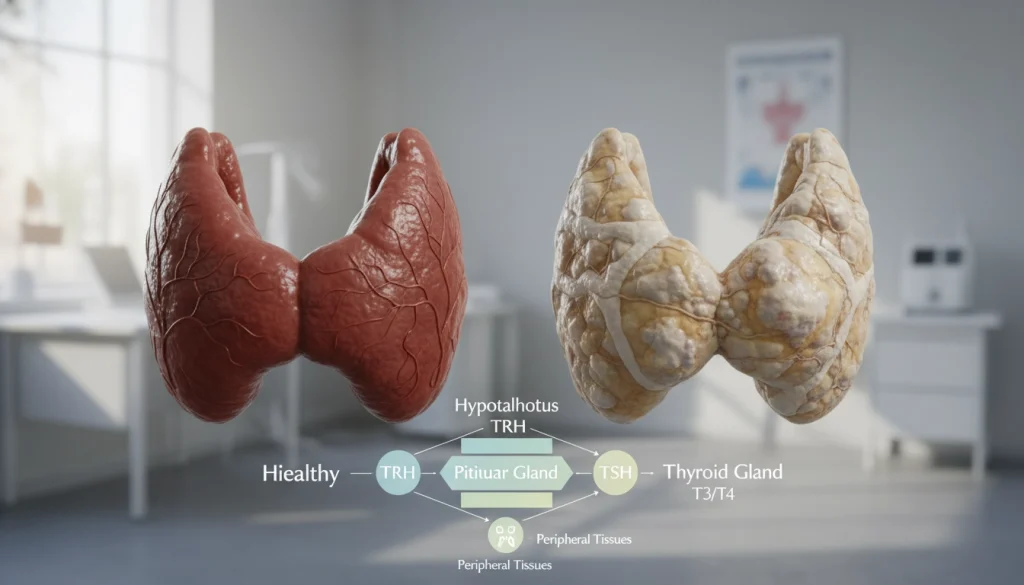
The thyroid gland sits at the base of your neck. It’s a small, butterfly-shaped organ that controls your body’s systems. It keeps you healthy by balancing your body’s functions. But, any problem with it can cause Thyroid Disease.
The Role of Hormones in Metabolic Regulation
The thyroid gland makes hormones that control your metabolism. These hormones, T4 and T3, go through your blood to every cell. They decide how fast your cells turn nutrients into energy.
When T3 and T4 levels are right, your body works well. It keeps a steady temperature and uses energy efficiently. But, if these levels change, you might feel very different. Keeping hormone levels balanced is key to avoiding Thyroid Disease and staying full of energy.
Interaction Between the Hypothalamus and Pituitary Gland
Your body has a smart system to keep thyroid hormones in check. It’s like an internal thermostat, involving the hypothalamus and pituitary gland.
- The hypothalamus checks hormone levels and tells the pituitary gland.
- The pituitary gland then sends Thyroid Stimulating Hormone (TSH) to the thyroid.
- This loop helps your body adjust to changes, like stress or temperature.
Understanding how these parts work together is key to knowing your endocrine health. When this balance is off, it often means you might have Thyroid Disease. Knowing about these processes helps you take care of your health and know when to see a doctor.
Defining Thyroid Disease and Its Prevalence in the United States
Understanding thyroid disease is key to managing your health. In the U.S., millions live with thyroid issues. This small gland in your neck controls many important functions. Even small changes can affect your health a lot.
Distinguishing Between Structural and Functional Disorders
Thyroid disease is divided into two main types: functional and structural. Functional disorders affect hormone levels, impacting your metabolism. These often need medication to fix.
Structural disorders involve physical changes to the gland. This can include nodules, cysts, or an enlarged gland called a goiter. These changes might not always affect hormone levels but need watching to stay safe.
| Category | Primary Focus | Common Examples |
|---|---|---|
| Functional | Hormone Levels | Hypothyroidism, Hyperthyroidism |
| Structural | Gland Anatomy | Nodules, Goiter, Cysts |
| Mixed | Combined Impact | Toxic Multinodular Goiter |
Demographic Trends and Risk Factors
Research shows thyroid disease affects certain groups more. Women are more likely to get it, especially during childbearing years or after menopause. Family history also increases your risk.
Age is another big factor. As we get older, the chance of thyroid problems grows. Knowing this helps us take better care of our health and get regular check-ups.
Hypothyroidism: Causes and Clinical Manifestations
When the thyroid gland slows down, it affects the whole body. This is called hypothyroidism. It happens when the gland doesn’t make enough hormones. This can hurt almost every part of the body, making Thyroid Disease very important for health.
Hashimoto Thyroiditis and Autoimmune Mechanisms
In the U.S., Hashimoto thyroiditis is the main reason for an underactive thyroid. It’s an autoimmune disease where the body attacks healthy thyroid cells. This causes long-term inflammation and damage to the gland.
This damage makes it hard for the thyroid to make hormones. Finding these signs early is key to managing Thyroid Disease.
Iodine Deficiency and Environmental Triggers
Autoimmune issues aren’t the only problem. External factors like iodine deficiency also affect thyroid health. Iodine is needed for thyroid hormones. Without enough, the gland can’t work right.
Some toxins and medicines can mess with iodine use. We tell patients to think about these factors for better endocrine health. Knowing these triggers is crucial for treating Thyroid Disease.
Common Symptoms of Underactive Thyroid
Spotting the signs of an underactive thyroid is the first step. People often feel tired, gain weight, and get cold easily. They might also have dry skin, brittle hair, and trouble focusing.
- Persistent fatigue and lethargy
- Unexplained weight gain or difficulty losing weight
- Increased sensitivity to cold temperatures
- Dry skin and brittle hair
- Cognitive fog or difficulty concentrating
| Cause Category | Primary Mechanism | Clinical Impact |
|---|---|---|
| Autoimmune | Immune system attack | Gradual tissue destruction |
| Nutritional | Iodine deficiency | Hormone synthesis failure |
| Environmental | Toxin exposure | Glandular interference |
By catching these symptoms early, patients can start to get better. Treating the cause of Thyroid Disease helps restore balance and improves life quality.
Hyperthyroidism: Overactive Gland Dynamics
When the thyroid gland works too hard, it causes hyperthyroidism. This is the opposite of Thyroid Disease, where too many metabolic hormones are made. These hormones control how cells use energy, making the body work too fast.
Graves Disease and Antibody Stimulation
Graves disease is the main reason for this problem. It’s an autoimmune disorder. Your immune system makes antibodies that tell the thyroid gland to keep working without stopping.
This makes too many hormones in your blood. Your organs and tissues then get signals to work faster. This can cause health problems if not treated.
Thyroid Nodules and Toxic Multinodular Goiter
Changes in the gland can also cause too many hormones. Thyroid nodules are abnormal growths on the gland. Some of these nodules can work on their own, making too much hormone.
When many nodules start making hormones, it’s called toxic multinodular goiter. This Thyroid Disease grows slowly over years. It’s more common in older adults who have had a goiter for a long time.
Recognizing the Signs of Thyrotoxicosis
Thyrotoxicosis is when you have too much thyroid hormone. It’s important to notice these signs early. This helps prevent heart and bone problems. Common signs include:
- Unexplained weight loss despite a normal or increased appetite.
- Rapid or irregular heart rate, often felt as palpitations.
- Increased anxiety, nervousness, or irritability.
- Sensitivity to heat and excessive sweating.
- Tremors in the hands or fingers.
If you see these signs, see a doctor. Early treatment can help your body get back to normal.
Diagnostic Procedures for Thyroid Disease
Getting a correct diagnosis is key to managing Thyroid Disease. We use different tools to check your health and find out what’s causing your symptoms. By looking at lab results and images, we get a clear picture of your thyroid’s function.
Interpreting TSH, Free T4, and T3 Blood Panels
Blood tests are how we check if your thyroid gland is working right. We look at Thyroid Stimulating Hormone (TSH) levels. This hormone tells your thyroid to work.
If TSH levels are off, we check Free T4 and T3 levels. These hormones show how much active thyroid hormone is in your blood. This helps us figure out what kind of Thyroid Disease you might have.
The Role of Thyroid Antibody Testing
When we think you might have an autoimmune disease, we do antibody tests. These tests show if your immune system is attacking your thyroid.
- Thyroid Peroxidase Antibodies (TPOAb)
- Thyroglobulin Antibodies (TgAb)
- Thyroid Stimulating Immunoglobulin (TSI)
Finding these markers helps us confirm diseases like Hashimoto’s or Graves’. This lets us create a treatment plan that fits your needs.
Imaging Techniques: Ultrasound and Radioactive Iodine Uptake
At times, blood tests aren’t enough to see the gland’s structure. We use ultrasound to find nodules, cysts, or size changes.
For gland activity, we use a radioactive iodine uptake test. This test shows how much iodine your gland takes in. It’s great for checking if your gland is working too much or too little. Below is a table that lists these common diagnostic tools.
| Diagnostic Tool | Primary Purpose | Clinical Insight |
|---|---|---|
| TSH Panel | Screening | Initial gland function |
| Antibody Test | Autoimmune check | Immune system activity |
| Ultrasound | Structural imaging | Nodule detection |
| Iodine Uptake | Functional mapping | Glandular activity levels |
Thyroid Nodules and the Risk of Malignancy
Thyroid nodules are common, but knowing what they are can ease your mind. Finding a growth on the gland can worry you, but most are not serious. Our goal in managing Thyroid Disease is to clear up confusion and lessen worry with careful checks.
Differentiating Benign Nodules from Thyroid Cancer
We use a detailed method to tell if a nodule is harmless or needs more attention. We look at the nodule’s size, how it looks on scans, and your health history.
Most nodules don’t cause problems and are found during routine checks or scans. If a nodule looks suspicious, we do more tests to make sure. This careful approach helps us avoid false alarms and manage Thyroid Disease well.
Fine Needle Aspiration Biopsy Procedures
For a closer look at a nodule, we use a fine needle aspiration (FNA) biopsy. It’s a simple procedure that gives clear answers with little discomfort. A thin needle takes a small cell sample from the nodule for lab tests.
The benefits of this procedure include:
- High accuracy in spotting potential cancer.
- Quick recovery, so you can get back to normal fast.
- Direct cell check, the best way to diagnose Thyroid Disease.
With these advanced tests, we make sure you get the best care. Our team is here to help you every step of the way, making sure you’re well-informed and supported on your path to health.
Thyroiditis: Inflammation and Its Varied Forms
Understanding thyroiditis is key for those dealing with thyroid disease. It’s a group of disorders that cause inflammation in the thyroid gland. This inflammation can lead to big changes in hormone levels, even if it’s just temporary.
Subacute Thyroiditis and Viral Triggers
Subacute thyroiditis often starts after a viral infection, like the flu. The immune system mistakenly attacks the thyroid. This causes stored hormones to leak into the bloodstream, leading to a painful neck and symptoms of hyperthyroidism.
Most people get better with time and the right care. But, it’s important to watch hormone levels closely as the inflammation goes away.
Postpartum Thyroiditis Considerations
Postpartum thyroiditis happens in some women in the first year after giving birth. It starts with a brief overactive thyroid phase, then becomes underactive. While many women get better, some may have permanent thyroid disease.
- Regular blood tests are recommended for those with a history of autoimmune issues.
- Symptoms like fatigue or mood swings should be discussed with a healthcare provider.
- Early detection helps in managing potential long-term hormonal imbalances.
Silent Thyroiditis and Chronic Inflammation
Silent thyroiditis, or painless thyroiditis, has few symptoms. Yet, the chronic inflammation can still cause big changes in metabolism. It’s often silent, so it needs careful watching to avoid long-term damage.
| Type of Thyroiditis | Primary Trigger | Common Symptom |
|---|---|---|
| Subacute | Viral Infection | Neck Pain |
| Postpartum | Post-pregnancy | Fatigue |
| Silent | Autoimmune | None/Mild |
We urge you to stay alert about your endocrine health. Spotting these inflammatory processes is the first step to managing thyroid disease and keeping your health in check.
Thyroid Disease During Pregnancy and Postpartum
During pregnancy, your thyroid gland works extra hard. It helps your body and your baby get the energy needed. If you have thyroid disease, it can make things harder. That’s why you need expert help for a healthy pregnancy.
Managing Maternal Thyroid Health for Fetal Development
Maternal hormones are crucial for the baby’s growth. In the early pregnancy, the baby gets all its thyroid hormones from the mother. We check your blood often to keep your levels right for your pregnancy stage.
If you have thyroid disease, we adjust your medicine as needed. This helps avoid risks like preterm birth or developmental delays. We want you to feel confident that your health is in good hands.
Postpartum Thyroid Dysfunction Management
After giving birth, your immune system changes a lot. This can sometimes cause thyroid problems. Catching these problems early is important for managing them.
We keep a close eye on you after birth for any signs of thyroid issues. If you feel tired, moody, or have heart problems, we’re here to help. Managing thyroid disease well lets you focus on healing and enjoying your new baby.
| Condition Phase | Primary Focus | Clinical Goal |
|---|---|---|
| Pregnancy | Fetal Development | Maintain Stable Hormone Levels |
| Postpartum | Immune Recalibration | Monitor Thyroid Disease Symptoms |
| Long-term | Endocrine Balance | Optimize Quality of Life |
Surgical Interventions for Thyroid Conditions
For many, a thyroidectomy is a big step towards better health. We always try non-invasive treatments first. But sometimes, surgery is the best way to get better. We help our patients through this with safety, clarity, and wellness in mind.
Indications for Thyroidectomy
Surgery is often needed when the thyroid gland blocks breathing or swallowing. It’s also used when there’s a chance of cancer. When medicine doesn’t work or biopsy shows bad signs, surgery is the next step to manage Thyroid Disease.
Choosing surgery is a team effort. We look at the gland’s size, any suspicious tissue, and your health. This ensures surgery is right for you.
Managing Post-Surgical Hormone Replacement
After the thyroid gland is removed, the body can’t make hormones. So, patients start hormone replacement therapy. This medicine helps keep your body balanced, even with Thyroid Disease.
We adjust your medicine based on blood tests. Being consistent helps you feel your best. Our team keeps an eye on your hormone levels to keep your body in balance.
| Condition | Primary Surgical Goal | Post-Surgery Expectation |
|---|---|---|
| Large Goiter | Relieve airway pressure | Hormone replacement required |
| Suspicious Nodules | Remove potential malignancy | Lifelong monitoring of Thyroid Disease |
| Hyperthyroidism | Eliminate overactive tissue | Stable hormone maintenance |
Radioactive Iodine Therapy and Its Applications
Learning about radioactive iodine therapy can make you feel more at ease with your thyroid disease treatment. This method is very effective and targets the thyroid directly. It’s especially useful for those who need a strong treatment.
Mechanism of Action in Hyperthyroidism
The thyroid gland uses iodine to make hormones. When you get this treatment, the gland absorbs the radioactive iodine. This helps shrink the overactive tissue.
This action reduces hormone production. It’s a precise method that only affects thyroid cells. It doesn’t harm other parts of the neck.
Safety Protocols and Long-term Monitoring
Your safety is our top priority. We follow strict clinical protocols during treatment. Our team gives you clear instructions to follow for your comfort and safety.
Managing thyroid disease means sticking to follow-up care. We stress the importance of long-term monitoring. This ensures your hormone levels stay healthy.
Regular blood tests help us track your progress. We adjust your care plan as needed. This teamwork helps you stay healthy even after treatment ends.
Pharmacological Management of Thyroid Disorders
Knowing your treatment options is key to managing thyroid disease. We use different medicines to balance your endocrine system. This improves your quality of life. Working with your healthcare provider ensures your treatment is safe and effective.
Levothyroxine Therapy for Hypothyroidism
Levothyroxine is often prescribed when your thyroid gland doesn’t make enough hormones. It’s a synthetic version of thyroxine (T4). It helps replace the missing hormones, improving your metabolism and energy.
Taking this medication consistently is crucial. We suggest taking it on an empty stomach in the morning for better absorption. Regular blood tests help us adjust your dosage to keep your thyroid disease in check.
Antithyroid Medications for Hyperthyroidism
For an overactive gland, we use antithyroid medications. These include methimazole or propylthiouracil. They block the thyroid’s iodine use, slowing hormone production.
These medicines need close monitoring to avoid side effects. We schedule regular check-ups to track your progress. This helps prevent complications from an overactive gland.
Beta-Blockers for Symptom Control
Beta-blockers help manage symptoms of hyperthyroidism like a fast heart rate, tremors, and anxiety. They don’t treat the thyroid issue but offer quick relief. They help you feel better while other treatments work.
- Levothyroxine: Replaces missing hormones for underactive glands.
- Antithyroid Drugs: Reduce hormone production in overactive glands.
- Beta-Blockers: Manage heart rate and tremors during hyperthyroid episodes.
Understanding these medications helps you take an active role in your care. We aim to guide you in making choices that improve your health.
Lifestyle Modifications and Nutritional Support
Healthy habits are key to good thyroid care. Medical treatments are important for conditions like hyperthyroidism. But, your daily choices also play a big role in your health. Eating right and living mindfully can help your body function better.
The Impact of Selenium and Zinc on Thyroid Health
Minerals are important for making hormones. Selenium helps turn inactive thyroid hormones into active ones. Zinc is also crucial for hormone making and keeping the immune system strong.
Getting enough of these nutrients can help keep your metabolism steady. We suggest eating whole foods to keep your levels right. Here’s a table of foods rich in these minerals:
| Mineral | Primary Food Sources | Key Benefit |
|---|---|---|
| Selenium | Brazil nuts, fish, eggs | Hormone conversion |
| Zinc | Oysters, pumpkin seeds, beef | Hormone synthesis |
Dietary Considerations for Autoimmune Thyroid Conditions
Autoimmune Thyroid Disease needs to be managed with care. Eating foods that fight inflammation can help. Focus on veggies, lean proteins, and healthy fats to calm your immune system.
Talking to your doctor about food sensitivities is crucial. Some people might need to cut out gluten or dairy. A diet tailored to you can help your health without stressing you out.
Stress Management and Its Effect on Endocrine Balance
Too much stress can mess with your endocrine system, making Thyroid Disease symptoms worse. Stress makes your body produce cortisol, which can harm your thyroid. Finding ways to relax is key for your health.
Try simple things to reduce stress and improve your mood:
- Do deep breathing exercises to lower cortisol.
- Do low-impact activities like walking or yoga.
- Make sure to get enough sleep to help your body regulate hormones.
By making these lifestyle changes and following your doctor’s advice, you can manage your Thyroid Disease better. Small, steady changes can lead to big improvements in your life.
Pediatric and Geriatric Considerations
Thyroid health is important from birth to old age. Children and seniors have different needs. We give each patient the right care for their Thyroid Disease.
Congenital Hypothyroidism and Early Screening
Early detection is key for kids’ endocrine health. Congenital hypothyroidism is when a newborn’s gland doesn’t make enough hormone. This is crucial for brain and body growth.
In the U.S., newborn screening finds this condition early. Catching Thyroid Disease early means starting treatment right away. This helps prevent delays and supports a healthy life for the child.
Managing Thyroid Dysfunction in Older Adults
As people get older, endocrine issues can get more complex. Symptoms of Thyroid Disease in seniors might be hard to spot. They can look like normal aging signs, like tiredness or memory loss.
We focus on finding real problems, not just aging. We use special tests to make sure treatment is safe and works for seniors.
When checking thyroid health, we look for certain signs:
- In infants: Prolonged jaundice, poor feeding, or excessive sleeping.
- In older adults: Unexplained weight changes, heart palpitations, or mood disturbances.
- General signs: Changes in energy levels or sensitivity to temperature.
We stay alert to these signs to give the right care for Thyroid Disease at any age. Our team is skilled in handling these special cases with care and knowledge.
Empowering Patients Through Informed Management
Managing thyroid disease is easier with trust and clear talk. We hope this guide helps you understand your endocrine system better. It also shows how to take care of your health well.
Knowing a lot about your health is key. By keeping up with new medical info, you help yourself get better. This way, you can live a healthier life for a long time.
At Acıbadem Healthcare Group, we’re here to help you. We offer expert advice and care with kindness. We focus on your special needs to manage your thyroid disease well.
Together, we can solve your problems and make a plan that suits you. If you have symptoms or test results, please talk to our experts. Starting your journey to a healthy life is easy with our help.
FAQ
Q: What is the primary role of the thyroid gland in the body’s metabolic system?
A: The thyroid gland is a vital organ at the neck’s base. It makes hormones like thyroxine (T4) and triiodothyronine (T3). These hormones control your body’s energy and metabolic rate.
This process is managed by a complex feedback loop. It involves the hypothalamus and the pituitary gland. They work together to keep your body in balance.
Q: What are the common indicators of Hypothyroidism?
A: Hypothyroidism happens when the gland doesn’t make enough hormones. Symptoms include constant tiredness, weight gain, and feeling cold easily.
Hashimoto thyroiditis is a common cause. It’s an autoimmune disease where the immune system attacks the thyroid. Iodine deficiency or environmental factors can also slow down metabolism.
Q: How does Hyperthyroidism differ from an underactive thyroid?
A: Hyperthyroidism means the gland makes too many hormones. This leads to a condition called thyrotoxicosis. Symptoms include a fast heart rate, anxiety, and losing weight too quickly.
Graves disease is a common cause. It happens when antibodies make the gland overactive. We also watch for thyroid nodules and toxic multinodular goiters.
Q: How is Thyroid Disease accurately diagnosed at Acıbadem Healthcare Group?
A: We use many tools to diagnose Thyroid Disease accurately. Blood tests check hormone levels. Antibody tests find autoimmune conditions.
Ultrasound and radioactive iodine uptake help see the gland’s structure. This helps us find any problems.
Q: Are thyroid nodules always a sign of cancer?
A: Most thyroid nodules are not cancerous. But we always check them carefully. If a nodule looks suspicious, we do a Fine Needle Aspiration (FNA) biopsy.
This test looks at the cells directly. It helps us decide the best treatment.
Q: Why is thyroid health so important during pregnancy?
A: Thyroid hormones are key for the baby’s growth, especially the brain. At Acıbadem Healthcare Group, we focus on managing Thyroid Disease during pregnancy.
This is to prevent problems for both the mother and the baby. We also watch for postpartum thyroiditis, an inflammation that can happen after delivery.
Q: What are the primary treatment options for managing thyroid disorders?
A: Our treatment depends on the type of Thyroid Disease. For hypothyroidism, we use levothyroxine to replace hormones.
For hyperthyroidism, we might use medications or radioactive iodine therapy. Surgery is sometimes needed for large goiters or suspicious nodules.
Q: Can lifestyle and nutrition support thyroid health?
A: Yes, lifestyle changes can help. Eating foods rich in selenium and zinc supports hormone production. Stress management and a healthy diet are also important.
These can improve overall health and make treatments more effective, especially for autoimmune-related Thyroid Disease.